My Store
Veer Abhimanyu
Veer Abhimanyu
Couldn't load pickup availability
The force in the title, which here alludes to the end of the Mahabharata and the start of Kalyuga, indicates that the end is the beginning of something new, as we can all sense.
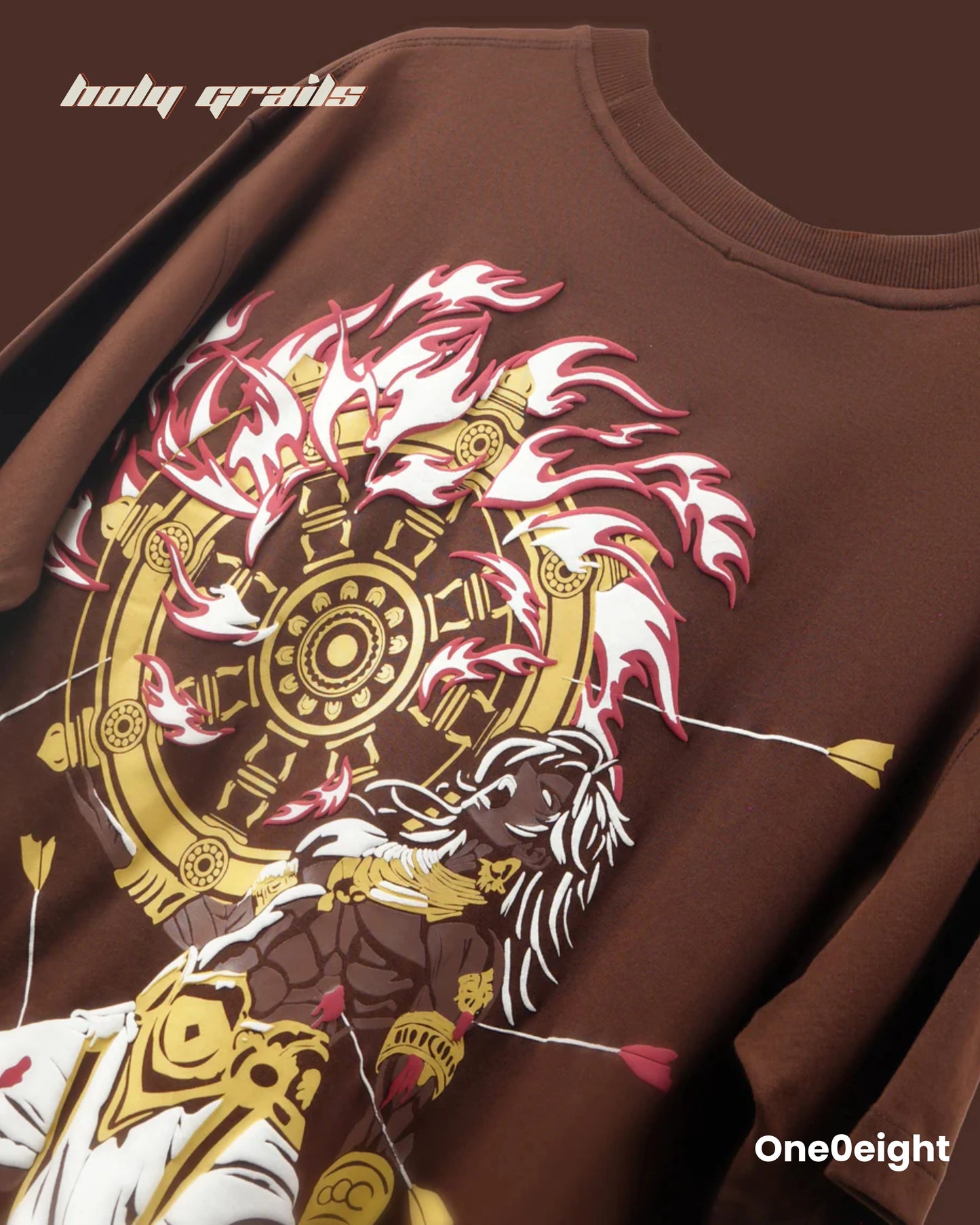
The heroic warrior Abhimanyu (son of Arjuna), who was misled to death on the Mahabharata battlefield at the age of sixteen, is depicted in the art form as having shown valor and bravery. In the war scene, he is shown wearing a white dhoti with golden jewels. One of the rare fighters who could join the Chakravyuha was Abhimanyu. He broke through and destroyed the Kauravas' strong resistance at Yudhishthira's orders. Duryodhana, Dushasana, Drona, Ashwatthama, Karna, and Shakuni were all vanquished by Abhimanyu in different conflicts. They broke the rules of war by coming up with a plan to attack him at the same time. His chariot was destroyed, his horses were killed, his weapons were broken, and he was shot with a lot of arrows, which is depicted in the art form as wounding several portions of his body and ensanguinating him.
Even though Abhimanyu's knees make contact with the earth, he fights on with a chariot wheel, his head held high with unwavering bravery. The wheel is depicted burning in shades of red and gold, signifying his fury and ruthless vengeance. Up until his final breath, the crimson pool of blood beneath his knees fills the parched ground with the blood of his adversaries. In the end, Dushasana's son shoots him in the head, causing him to die a hero from his wounds.
Among the greatest of warriors, Abhimanyu's name is inscribed in golden letters throughout history. His story endures, even in Kalyuga, and will never be forgotten, even though his corpse died with the Mahabharata.
Share